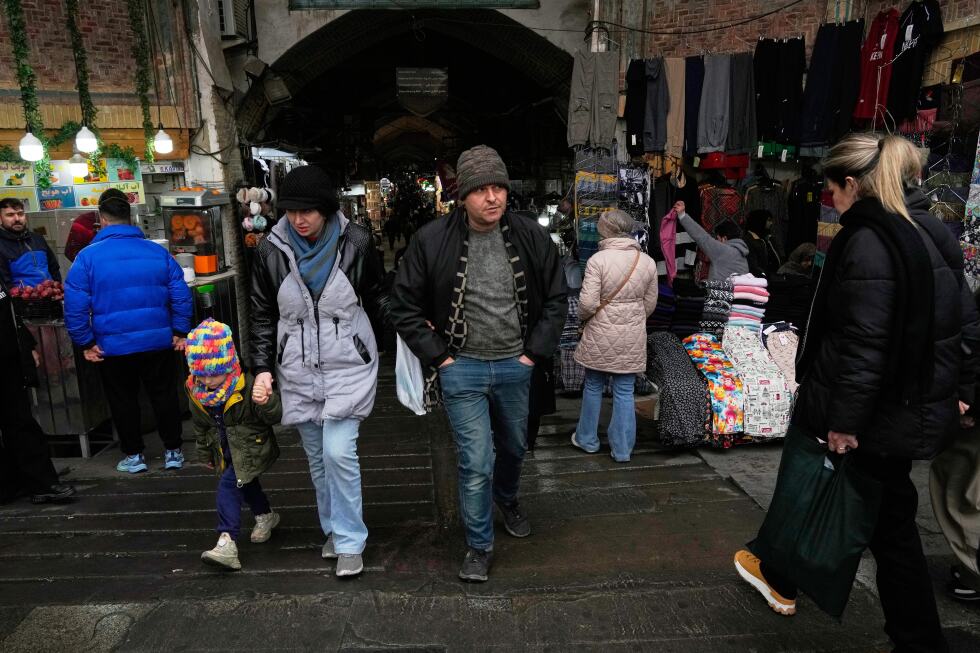
Iran's Top Diplomat Rejects Execution Claims Amid Mounting International Pressure
In a period of heightened scrutiny and global concern surrounding internal protests, Iran's foreign minister, Abbas Araghchi, has issued a categorical denial regarding any plans for executions of protesters. His statements, made during an interview with Fox News, directly challenge earlier assertions by US President Donald Trump, who claimed to have received assurances that planned killings had ceased. These Iran updates are crucial for understanding the country's delicate political landscape and its interactions with the international community.
The controversy stems from widespread anti-government protests that have gripped Iran, leading to a significant crackdown by authorities. Rights groups have reported thousands of deaths among protesters, and Iran's judiciary had previously signaled the likelihood of swift trials and executions for those detained. It is against this grim backdrop that Araghchi offered his reassurances, stating unequivocally, "There is no plan for hanging." He emphasized, "I can tell you, I'm confident that there is no plan for hanging," and further stressed that no executions would take place "today or tomorrow."
This diplomatic pushback comes after President Trump told reporters he had received assurances from "very important sources on the other side" that executions had stopped. Trump expressed hope that the information was true, underscoring the international focus on human rights in Iran. The foreign minister's denial, therefore, serves as a direct counter-narrative, attempting to assuage global fears and perhaps mitigate further international condemnation. However, the stark contrast between the judiciary's earlier pronouncements and Araghchi's current statements highlights the complex and often opaque nature of governance and policy-making within Iran, particularly during times of internal unrest.
Navigating Uncertainty: Travel Warnings and Airspace Disruptions
The ongoing unrest and geopolitical tensions in Iran have not only sparked diplomatic exchanges but have also triggered significant practical implications for international travel and regional security. Several nations have issued urgent advisories, urging their citizens to depart Iran or reconsider travel plans, underscoring the volatile security situation.
- India's Urgent Advisory: The Indian Foreign Ministry has called upon its estimated 10,000 citizens in Iran—comprising students, pilgrims, business persons, and tourists—to leave the country "by available means of transport." This sweeping advisory, issued via a social media post by the Indian Embassy in Tehran, reflects deep concern for the safety of its nationals. For Indian citizens, especially those engaged in long-term stays such as students, this presents a significant challenge requiring immediate logistical planning.
- United Kingdom's Embassy Closure: The British Embassy in Tehran has temporarily closed its doors, with staff withdrawn "due to the security situation." The UK Foreign Office has since advised all British citizens against any travel to Iran. Those already present are urged to "carefully consider your presence there and the risks you take by staying." This move signifies a severe downgrade in diplomatic presence and a clear warning of escalating dangers within the country, particularly with reports of an internet blackout hindering communication and information flow.
Beyond these specific country advisories, Iran's airspace has experienced significant disruptions. An initial Notam (Notice to Airmen) closing Iranian airspace until 07:30 p.m. ET (0030GMT) was later extended until 10:30 p.m. ET. This temporary closure forced numerous airlines to divert or cancel flights that were originally scheduled to pass through the region, leading to widespread travel chaos. While flight-tracking websites like Flightradar24 reported some flights resuming operations toward Tehran after the Notam's expiry, such closures underscore the unpredictability of the situation and the immediate impact it has on global aviation networks. Travelers with itineraries passing through or originating from the Middle East are advised to check Iran travel updates frequently with their airlines and relevant government travel advisories for the most current information.
Regional Security Posture and US Presence
The prevailing atmosphere of uncertainty in Iran has naturally led to a reassessment of security protocols and military postures across the Middle East, particularly concerning US assets and personnel. The US Embassy in Doha, for instance, has advised Qatar to limit non-essential travel to Al Udeid Air Base, a critical hub housing US Air Force and other foreign forces. While the embassy stated that "US Embassy staffing and operations are unchanged, and consular services continue as normal," this advisory reflects a precautionary measure in response to regional volatility.
Adding to these measures, news reports have indicated that the US began withdrawing troops from key military bases in the Middle East as a precautionary step. Such movements, while not explicitly linked to the protests in Iran, are consistent with a broader strategy of de-escalation or repositioning in a region perpetually on edge. The US mission's commitment to "monitor the situation" suggests a vigilant approach to protecting its interests and personnel amidst the evolving geopolitical landscape. These developments are vital Iran updates for regional stability, demonstrating how internal events in one country can trigger ripple effects across the entire Middle East.
The Shadow of Past Crises: A Volatile Geopolitical Landscape
The current tensions and diplomatic maneuvers in Iran do not exist in a vacuum; they are set against a backdrop of decades of complex geopolitical dynamics and occasional seismic events that have profoundly shaped the nation's trajectory and its relationship with the world. Iran has historically been a focal point of regional and international power struggles, and understanding these deeper historical layers is crucial for comprehending the present.
Indeed, the nation has faced unprecedented challenges that have plunged it into deep crises, challenging its sovereignty and internal stability. Moments of extreme external pressure, including coordinated military actions and explicit calls for regime change from powerful international actors, have left an indelible mark. Such escalations, whether real or threatened, have often resulted in significant loss of life, including political figures and ordinary civilians, drawing widespread condemnation from international bodies like the United Nations, China, and Russia, who have consistently described such actions as violations of international law. For instance, the echoes of past rhetorical calls from leaders, such as a US President urging Iranians to "take over your government" in the wake of a major geopolitical confrontation, serve as stark reminders of the profound external pressures that can exacerbate internal dissent and push a nation towards a precipice. These historical events underscore the deep-seated mistrust and animosity that complicate diplomatic resolutions and perpetuate a cycle of tension. For more historical context on such profound events, refer to Iran Plunges into Crisis After US-Israel Military Strike.
Conclusion
The latest Iran updates present a picture of a nation grappling with severe internal unrest, navigating complex international relations, and facing a myriad of challenges that threaten its stability. Foreign Minister Araghchi's denial of execution plans, while a significant diplomatic move, exists in a contentious space, shadowed by the judiciary's earlier threats and President Trump's contradictory claims. Meanwhile, the tangible impacts of this instability are evident in widespread international travel advisories, disruptions to global aviation, and a cautious reorientation of military assets in the region. The broader historical context of external pressures and past crises further illuminates the deeply volatile nature of Iran's geopolitical environment. As events continue to unfold, the international community watches closely, hoping for a peaceful resolution that upholds human rights and restores regional stability, underscoring the critical need for continued vigilance and informed discourse on these complex issues.